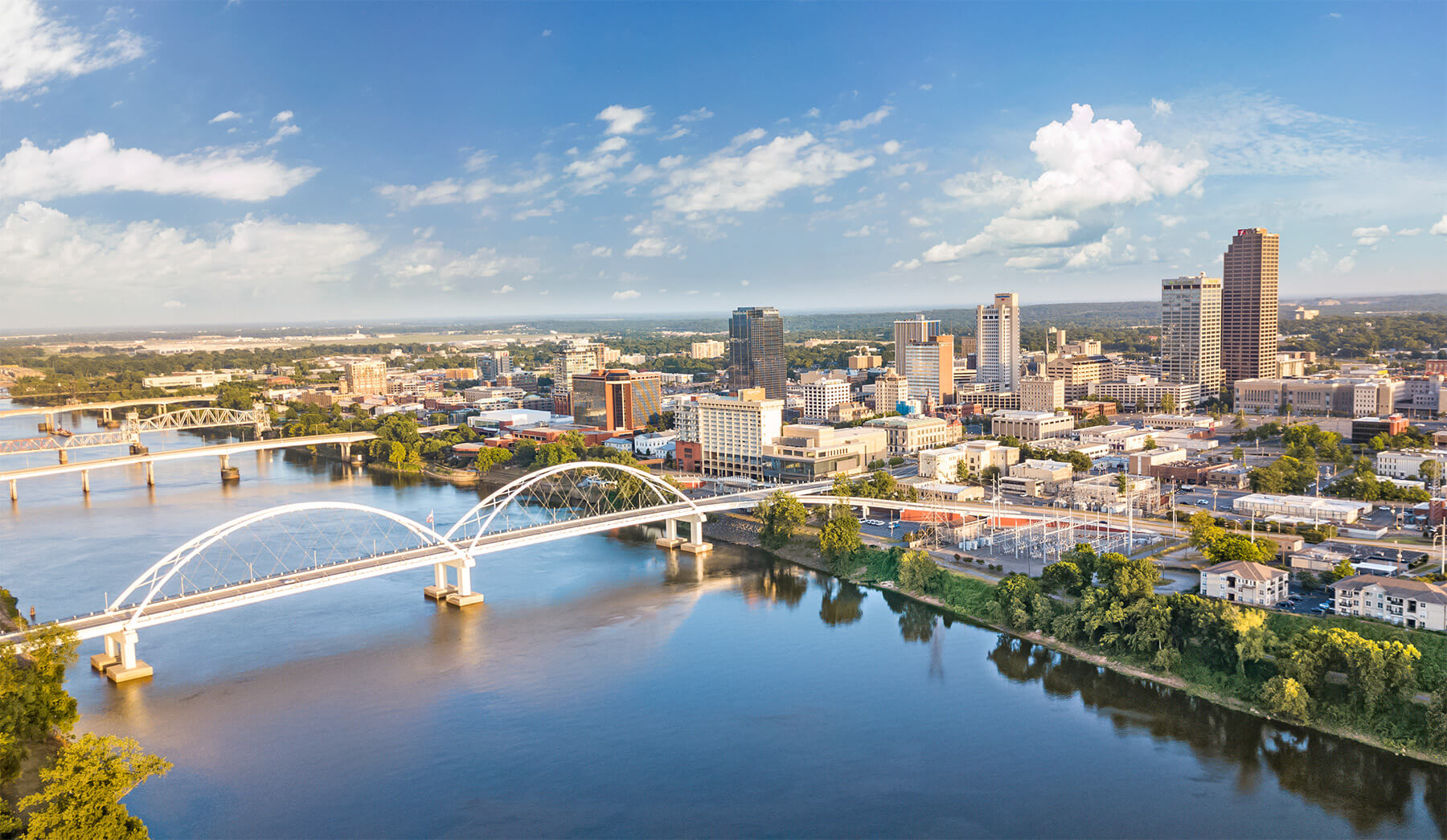
In April 2026, Google confirmed that we have purchased land at the Port of Little Rock for a potential data center. We are in the very early stages of reviewing this opportunity and evaluating options to determine if the site is the right fit for a long-term partnership with the community.
You asked, and we listened! We recognize that there is a lot of speculation out there. We've built this page to be the source of truth for facts and updates as we move forward together.
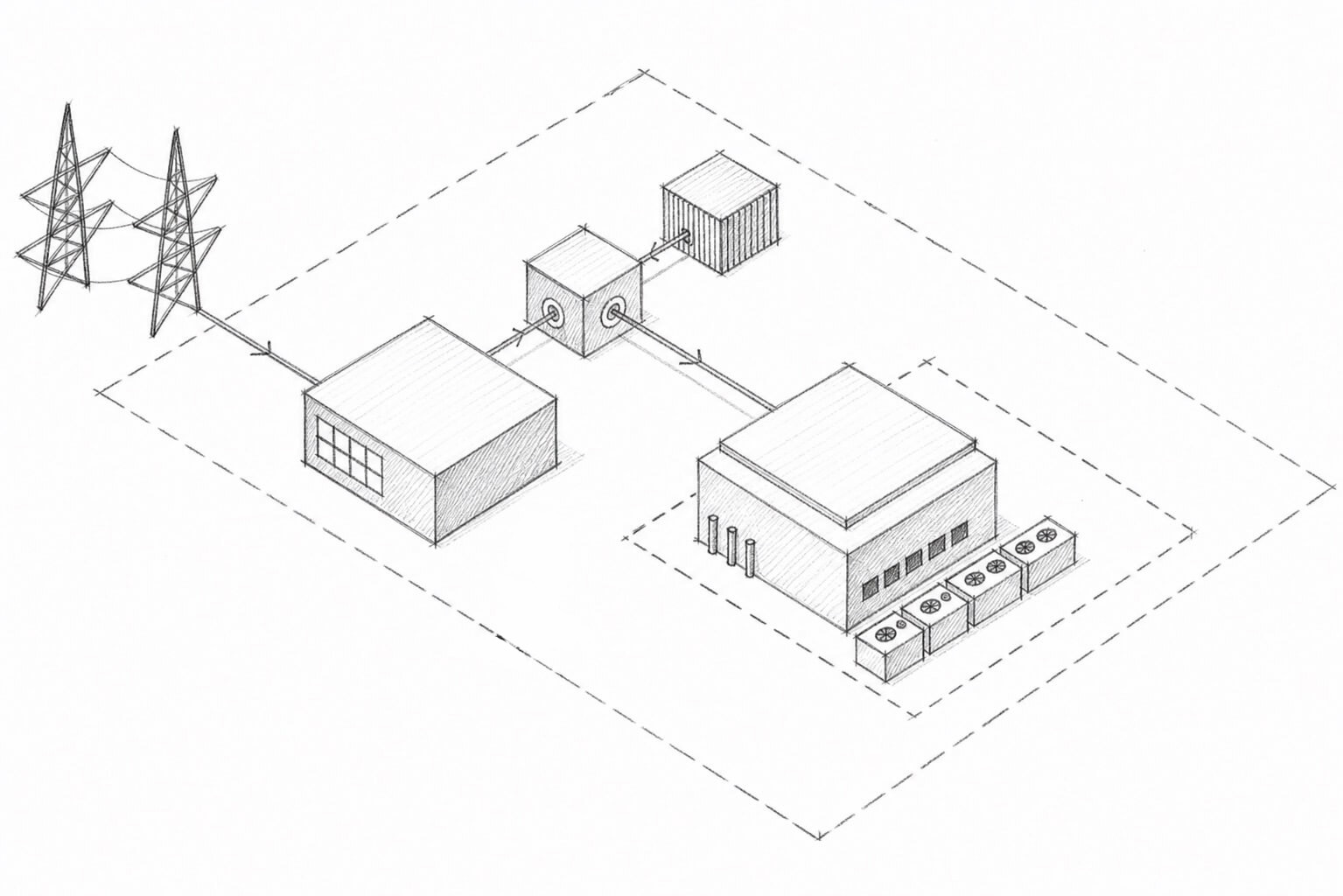
Data centers are the engines of the internet. They power all the things we do online every day like browsing websites, watching videos and sending emails. From the outside, a data center looks similar to a modern warehouse; from the inside, it houses the "engine room" of the internet-thousands of powerful computers called servers that store and process almost everything we do online.
Data centers are the backbone of our digital world, supporting the essential services we rely on every day, for example:
Data centers power the electronic health records used by 78% of office-based physicians. Today, this technology also supports Al innovation that helps doctors accelerate cancer detection and assist in life-saving scientific discovery.
They make it possible for local businesses to process online payments and reach customers through the cloud. In fact, 75% of small businesses say that limited access to technology would harm their operations.
These facilities power local 911 systems, electronic banking, and remote work platforms. They even help local governments streamline services for citizens and track natural disasters like floods and wildfires to keep communities.
We want to be a neighbor that listens and gives back. Because data centers are major investments, Google's investments provide a large amount of state and local tax revenue into the communities we call home. This tax revenue often goes directly to funding local schools, fire departments, and parks—all while requiring very few city services in return.
At Google, we focus on Responsible Development.
Our projects are not "cookie-cutter" facilities; we evaluate each site individually to optimize for business needs, the environment, and the local community.
Every Google data center is customized to fit the unique characteristics of its site. For example, in water-stressed regions like West Memphis, Arkansas, we opted for air-cooling technology, and in other locations, we have funded wastewater treatment systems or partnered with local farmers on irrigation. We want to create enduring, mutually beneficial partnerships that respect the local landscape and neighborhood character.
Project Evaluation Timeline
Infrastructure projects of this scale require careful planning. We are currently in the very early stages of a thorough review process.
| Phase | Status | Activities |
|---|---|---|
| 1. Site Discovery | Complete | Preliminary identification of Southeast Little Rock as a potential location for investment. |
| 2. Evaluation & Diligence | In progress | Performing engineering research, environmental studies, and utility load modeling to determine technical viability. |
| 3. Public Comment & Permitting | In Progress | Engaging in standard procedures, such as the U.S. Army Corps of Engineers public notice, to evaluate impacts. |
| 4. Final Determination | Future | A final decision to build is only made after all diligence and public reviews are complete. |
Process & Compliance
Transparency is our priority. As part of our planning process for the proposed Little Rock Data Center, Google has to work through rigorous local, state, and federal benchmarks. Because site designs, utility plans, and environmental calculations are deeply interconnected, we must work through these steps in a careful, sequential manner. Below is an illustrative guide to the types of permits, compliance reviews, and public comment opportunities we expect to navigate. Please note that this is a representative list and is subject to change as we further analyze, design, and optimize the final project scope.
| Benchmark / Permit | Specific / Technical Term | Regulating Body / Authority | What It Means | Estimated Timeframe (Once Filed) | Status | Public Participation Opportunity |
|---|---|---|---|---|---|---|
| Pre-Groundbreaking & Environmental Safeguards | ||||||
| Wetlands & Natural Resources Protection | Section 404 Permit | U.S. Army Corps of Engineers (USACE) | A federal review ensuring local wetlands, historic sites, and wildlife are protected. This involves buying mitigation bank credits to restore wetlands elsewhere, and coordinating with the U.S. Fish & Wildlife Service (USFWS) and the Arkansas Historic Preservation Program (AHPP). | Anticipated 12–18 Months | Withdrawn (June 2026) for Design Optimization | Yes |
| State Water Quality Certification | Individual Section 401 Certification | Arkansas Department of Environmental Quality (DEQ) | A state-level review confirming that the project's design and operations strictly align with Arkansas water safety and purity standards. | Anticipated 4–6 Months | Not yet filed | Yes |
| Temporary Construction Water Permit | Short Term Activity Authorization (STAA) | Arkansas Department of Environmental Quality (DEQ) | A temporary state permit required before any construction equipment can safely enter, cross, or work near local streams or wetland areas. | Anticipated 2–3 Months | Not yet filed | N/A |
| Runoff & Stormwater Program | NPDES Stormwater & Construction Permits | Arkansas Department of Environmental Quality (DEQ) | A comprehensive water safety plan to filter, control, and safely manage runoff water during and after construction. | Anticipated 3–4 Months | Not yet filed | Yes |
| Airspace Safety Review | FAA Form 7460-1 | Federal Aviation Administration (FAA) | A federal safety filing ensuring that physical building structures and cooling towers do not interfere with flight paths for nearby airports (like LIT). | Anticipated 3–5 Months | Not yet filed | N/A |
| Compliance Reports & Studies | ||||||
| Water Efficiency Study | Water Utilization PE Report | Certified Professional Engineer (PE) / City Review | A formal, certified engineering study mapping out annual water usage, recycling loops, and efficiency plans to ensure conservation. | Anticipated 2–3 Months | Not yet filed | N/A |
| Sound & Noise Modeling | Acoustical Boundary Model | City of Little Rock Planning Dept | A predictive sound study to guarantee that operational noise remains well within the strict limits of Little Rock's I-3 (Heavy Industrial) zoning code. | Anticipated 2–3 Months | Not yet filed | N/A |
| Energy Efficiency Roadmap | Energy Management Plan | City of Little Rock Planning Dept | A detailed tracking plan monitoring our Power Usage Effectiveness (PUE) to ensure we meet top-tier energy conservation standards. | Anticipated 2–3 Months | Not yet filed | N/A |
| Approvals & Utilities | ||||||
| City Partnership Agreement | Development Agreement | City of Little Rock Board of Directors | A formal municipal contract outlining service boundaries, infrastructure connections, and community commitments. | Anticipated 3–6 Months | Not yet filed | Yes |
| Utility Power Agreement | Special Rate Contract | Arkansas Public Service Commission (APSC) & Entergy | A tailored utility agreement submitted to state regulators in partnership with our local power provider, Entergy. | Anticipated 6–9 Months | Not yet filed | Yes |
| Backup Power Air Safety Permit | Minor Source / Air Quality Permit | Arkansas Department of Environmental Quality (DEQ) | A state-level safety review and approval process for our clean, emergency backup diesel generators. | Anticipated 4–6 Months | Not yet filed | Yes |
| Site Plan & Planning Reviews | COLR Development Applications | Little Rock Planning Staff & Planning Commission | Comprehensive municipal site design, zoning, and landscaping reviews held during public hearings. | Anticipated 3–4 Months | Not yet filed | Yes |
Your Voice Matters: Items under “Public Participation Opportunity” that are marked “Yes” reflect a regulatory process that includes several dedicated periods for public feedback, hearings, or public comment windows. We warmly encourage community members to participate in these scheduled opportunities.
Transparency
We Plan Carefully.
We recognize the importance of open communication. We believe the community deserves facts, accuracy and transparency - not speculation. Because project parameters —such as engineering requirements —are speculative during this early phase, we use this time to complete our research.
Our goal is to ensure that when we provide information to the public, it is real, vetted, and actionable. We want to be able to answer the community's hard questions with data, not guesses.
We know you have questions about how a project like this might affect your daily life. Below you will find answers to some common questions. We also welcome you to share additional questions via the inquiry form below.
Will the data center cause energy bills to increase for local residents?
In short, no. Google pays its own way. Google pays for 100% of the power our data centers use, plus any new infrastructure directly driven by our growth protecting local residents from these costs.
The facility will secretly consume millions of gallons of water from local lakes and pollute the Arkansas River.
We are committed to responsible water stewardship. In consultation with local experts, we find the best cooling solution for each site - balancing the availability of carbon-free energy and responsibly-sourced water — to minimize the net climate impact both today and in the future. We annually publish our water usage in every metro on our Environmental Report.
The data center will produce deafening jet-engine noise and low-frequency humming 24/7.
We use high-tech, low-noise equipment, sound walls, and building setbacks to ensure we meet or exceed all local noise ordinances. Every project includes an expert acoustical study to model and minimize any impact on the surrounding area.
The data center will cause massive air pollution.
Google is leading the transition to clean energy. Google acts as a responsible environmental steward and utilizes clean energy.
Investing in Neighbors.
We are committed to being a strong community partner. However, we do not simply copy-paste our programs from other cities; we tailor them to local needs.
Our community partnerships at our first Arkansas campus (in West Memphis) began well before we even broke ground. Since last fall, we have worked closely with local and regional nonprofits, civic organizations, and business leaders—listening, forging deep relationships, and providing grants, capacity-building, thought partnership, and authentic in-person engagement to support workforce development programs, entrepreneurs, community college students, faith leaders, and more.
For the Port of Little Rock site, should the project move forward, we would start with that same listening process.
“This program exists because of a historic $75,000 investment from Google Data Centers, which represents the largest financial gift in the 30-year history of the group. Needless to say, when I read the email from Google informing us of the investment and their engagement support, I was stunned.”
– Raymond Whiteside, Executive Director, Broadway & Missouri Streets Merchants Association West Memphis
For more inspiration on how we work with local communities, visit our website at datacenters.google